Listen to this article
We do not usually talk about stool at the dinner table. Yet what leaves the body can tell us a lot about what is happening inside it. Your poo is not just waste. It is a daily report from your digestive system, shaped by your diet, your gut microbes, your hydration, your lifestyle, and even your stress levels.
This may sound slightly uncomfortable, but it is also deeply useful. Stool is one of the simplest signals your body gives you. Its regularity, texture, and comfort can reflect how well your digestive system is moving, how much fibre you are eating, and how your gut ecosystem is responding to your everyday food choices.
Meet your gut microbiota
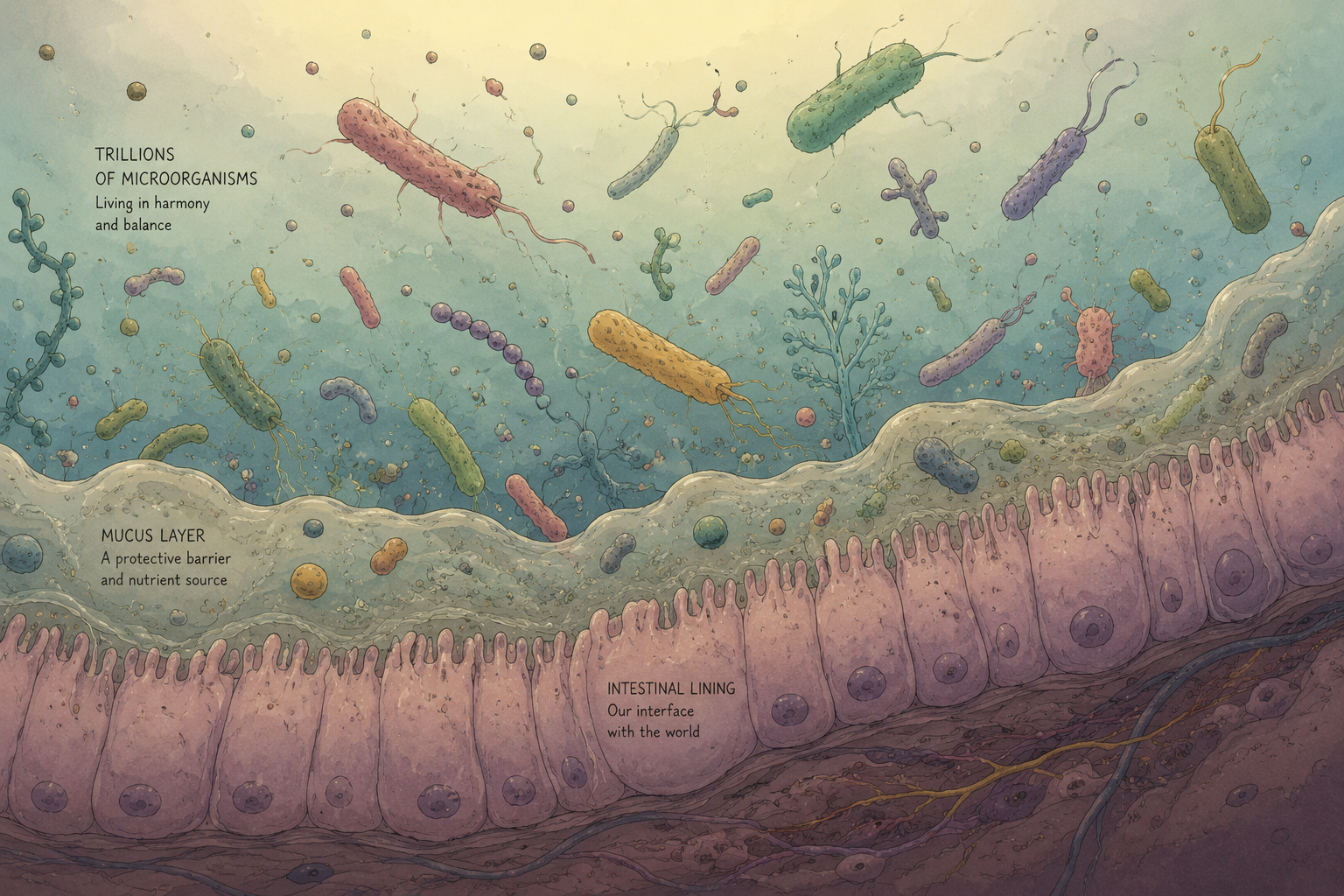
At the centre of this story is the gut microbiota: the vast community of bacteria, fungi, viruses, and other microbes living in the digestive tract. These microbes help break down food, produce useful compounds, support the immune system, and influence gut health.
One of the best ways to support them is through fibre-rich foods. Dietary fibre interacts directly with gut microbes and can lead to the production of important microbial metabolites such as short-chain fatty acids.
This is where mushrooms become especially interesting.
Why mushrooms are different from ordinary vegetables
Mushrooms are fungi, not plants. That matters. They contain unique fibres and bioactive compounds that can interact with the gut microbiota in ways that are different from many ordinary vegetables.
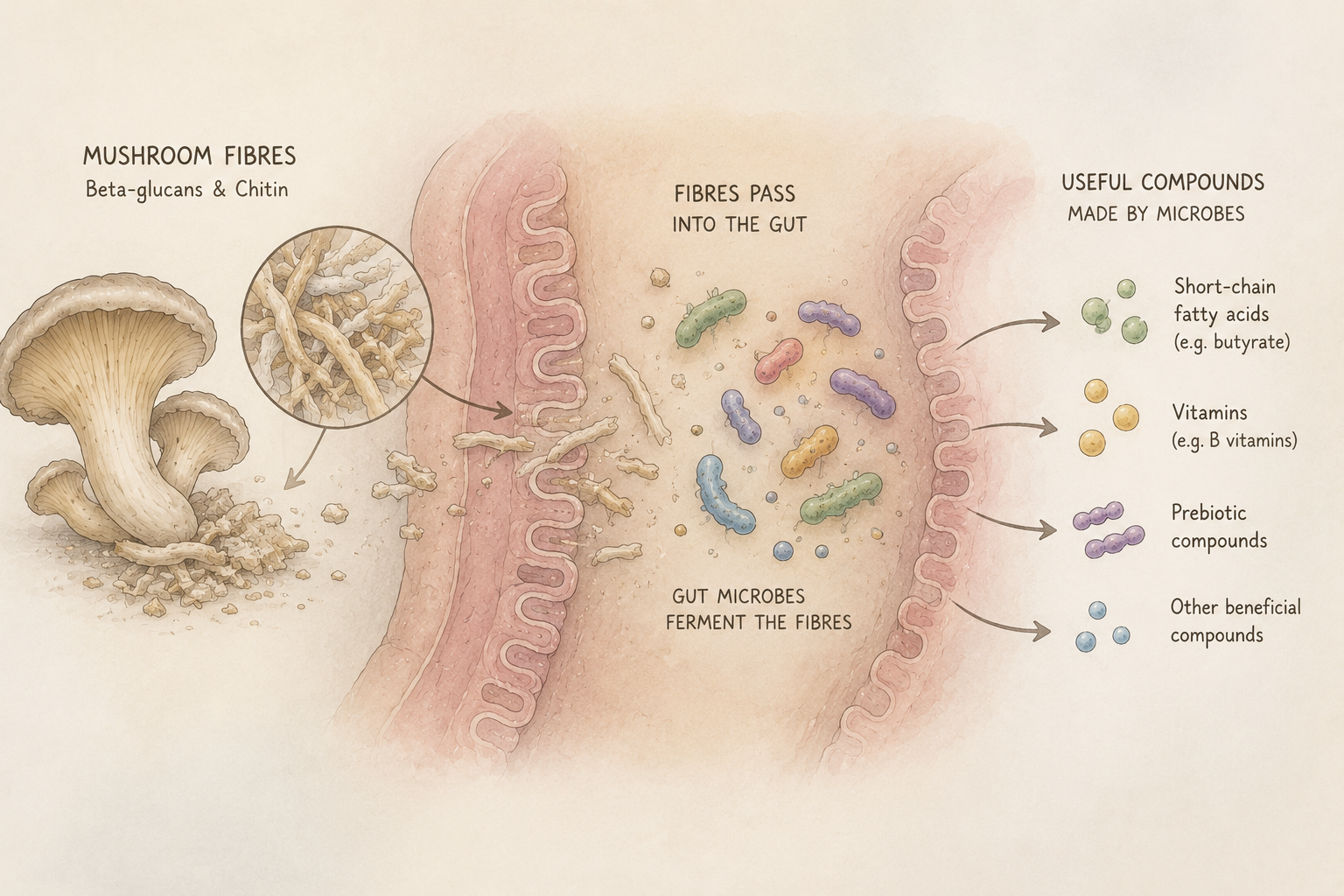
Different mushrooms contain different mixtures of fibre, including beta-glucans, chitin, hemicellulose, and other complex polysaccharides. These are not fully digested by human enzymes, which means they can travel through the gut and become food for beneficial microbes.
In simple terms, mushrooms bring fungal fibre to the table.
Mushrooms as prebiotic food
This is why mushrooms are often discussed as having prebiotic potential. A prebiotic is not a bacterium itself. Instead, it is a substance that is selectively used by host microorganisms and provides a health benefit.
When gut microbes ferment fibre, they can produce short-chain fatty acids such as acetate, propionate, and butyrate. These compounds are important because they help nourish the cells lining the colon, support the gut barrier, and play roles in inflammation and metabolism.
⬡ Gut Health Note
Short-chain fatty acids are mainly produced when gut microbes ferment dietary fibre. They are one reason fibre-rich diets are so closely linked with gut health.
The special fibres inside mushrooms
Mushroom fibre is special because it is structurally different from many plant fibres. Mushroom dietary fibres mainly include chitin, beta-glucan, hemicellulose, and other complex polysaccharides, with beta-glucan often considered one of the most important components.
Mushroom polysaccharides have also been studied for their ability to modulate gut microbiota, increase short-chain fatty acid production, and support intestinal barrier function.
In simple terms, mushrooms can help feed the microscopic workers that keep your gut ecosystem active.
Not all mushrooms are the same
Different mushrooms may offer different gut-friendly benefits. Button mushrooms are widely available and easy to include in everyday meals. Oyster mushrooms are known for their beta-glucans and are often studied for their nutritional value.
Shiitake mushrooms contain lentinan, a type of beta-glucan that has been studied for immune-related properties. Lion’s mane is popular for its potential links to nerve and brain health, while reishi is often used in traditional contexts and studied for its polysaccharides.
However, it is important to avoid treating any mushroom as a miracle cure. The strongest message is not that one mushroom fixes the gut. The stronger, more responsible message is that a diverse, fibre-rich diet supports a more resilient microbiota.
What does this have to do with poo?
So, what does this have to do with poo?
Stool is partly made from undigested food material, water, shed gut cells, and microbes. When your diet is low in fibre, stool can become harder and slower to pass. When fibre intake improves gradually, stool often becomes easier to move, more regular, and better formed.
Mushrooms contribute modest amounts of fibre and nutrients while being low in calories and fat. They may not replace beans, whole grains, fruits, or vegetables as major fibre sources, but they can be a valuable part of a gut-friendly plate.
Gut health loves variety
The key is variety. Your gut microbiota thrives when it receives different types of fibres from different foods.
Mushrooms bring fungal fibre to the table. Legumes bring resistant starch and soluble fibre. Grains bring bran and beta-glucans. Vegetables bring pectin, cellulose, and many other compounds.
A varied fibre-rich diet supports gut microbial activity and short-chain fatty acid production. This is why gut health should not be reduced to one food, one supplement, or one trend. The gut prefers diversity.
How to add mushrooms to your diet
Mushrooms are easy to add to soups, stir-fries, omelettes, pasta, curries, and salads. Cooking them can improve texture and digestibility, and it also makes them easier to include in everyday meals.
If you are not used to eating much fibre, introduce mushrooms and other fibre-rich foods gradually and drink enough water. Sudden increases in fibre can cause bloating or gas because your microbes need time to adjust.
⬡ Practical Takeaway
Add mushrooms slowly and regularly. Pair them with legumes, grains, vegetables, and enough water for a more balanced gut-friendly plate.
Final thought: mind your inner ecosystem
In the end, minding your poo is really about minding your inner ecosystem. Stool is a signal, not an embarrassment.
Mushrooms, with their beta-glucans, chitin, and other fibres, offer one more way to support the gut microbiota that quietly works for us every day.
They are not miracle cures. They are not medical treatments. But they are meaningful foods: fungal, fibre-rich, earthy, and biologically interesting.
The next time mushrooms appear on your plate, think beyond flavour. Think of fibre. Think of microbes. Think of the quiet fermentation happening deep inside the gut. Think of the daily signal your body gives you, and what it may be trying to say.
Mind your mushrooms. Mind your microbes. And yes, mind your poo.
References
1. Makki, K., Deehan, E. C., Walter, J., & Bäckhed, F. (2018). The impact of dietary fiber on gut microbiota in host health and disease. Cell Host & Microbe.
2. Yu, C. et al. (2023). The Effect of Mushroom Dietary Fiber on the Gut Microbiota and Related Health Benefits: A Review. Journal of Fungi.
3. Gibson, G. R. et al. (2017). Expert consensus document: The International Scientific Association for Probiotics and Prebiotics consensus statement on the definition and scope of prebiotics. Nature Reviews Gastroenterology & Hepatology.
4. Xiong, R. G. et al. (2022). Health Benefits and Side Effects of Short-Chain Fatty Acids. Foods.
5. Nogal, A., Valdes, A. M., & Menni, C. (2021). The role of short-chain fatty acids in the interplay between gut microbiota and diet. Nutrients.
6. Zhao, J. et al. (2023). The Interaction between Mushroom Polysaccharides and Gut Microbiota and Their Effect on Human Health: A Review. Biology.
7. Cerletti, C. et al. (2021). Edible Mushrooms and Beta-Glucans: Impact on Human Health. Nutrients.
8. Harvard T.H. Chan School of Public Health. Mushrooms — The Nutrition Source.